
Alaska Found 77 Places to Grow More Seafood. That’s the Easy Part.
- Lacey Ernandes
- Apr 20
- 4 min read

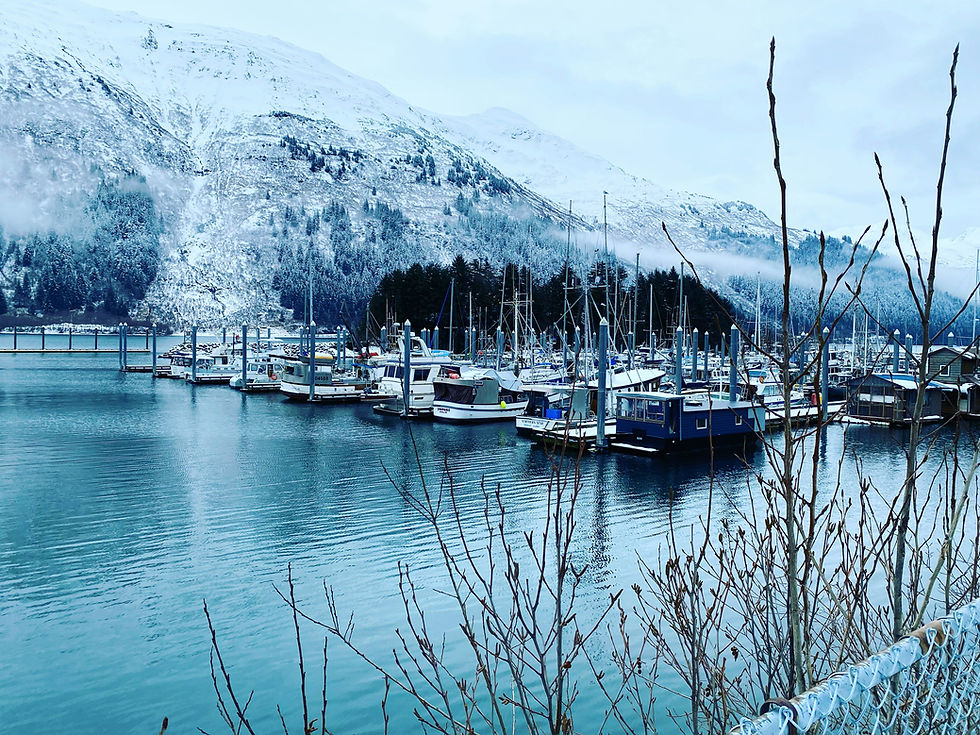
Alaska already produces a massive amount of seafood.
But most of it comes from the same place it always has: wild harvests, driven by seasons, conditions, and variability that can’t be fully controlled.
Aquaculture offers something different.
More consistency.
More predictability.
More control over production.
And now, there’s movement to expand it.
The federal government recently opened public comment on 77 potential aquaculture sites across Alaska.
On paper, that sounds like a major step forward.
More sites means more opportunity. More production. More economic activity.
But in Alaska, identifying where something could happen is rarely the hard part.
The hard part is everything that comes after.
Because a site isn’t an operation.
It’s just a location.
Turning one of those sites into a functioning aquaculture business means building an entire system around it.
Equipment has to be manufactured or sourced.Infrastructure has to be installed and maintained.Product has to be harvested, processed, stored, and moved.
And all of that has to happen in environments where:
logistics are complex
costs are high
and infrastructure is limited
That’s where the real work begins.
Aquaculture is often talked about as farming.
But in practice, it looks a lot more like manufacturing.
You’re not just growing something. You’re managing inputs, controlling conditions, coordinating production cycles, and delivering a consistent product into a market that expects reliability.
That requires:
systems
equipment
coordination
Not just water and space.
And that’s where Alaska’s familiar constraints start to show up again.
Even if production increases, the product still has to move.
From coastal sites to processing facilities.From processing to storage.From storage to market.
Each step adds cost.
Each step depends on infrastructure that may or may not be nearby.
In many cases, that means:
barges
limited cold storage
tight timelines
The same challenges that already define seafood processing and distribution today don’t disappear with aquaculture.
They expand with it.
That doesn’t mean aquaculture isn’t viable.
It means it has to be built differently.
What makes this opportunity compelling is where it can happen.
Unlike some industries that concentrate in larger hubs, aquaculture has the potential to operate in smaller coastal communities.
Places where:
access to resources exists
but economic diversification is limited
That creates a different kind of growth.
Not centralized.
Distributed.
But distributed systems come with their own challenges.
Every site isn’t just a production point.
It’s a logistics problem to solve.
A workforce to support.
An infrastructure gap to fill.
A supply chain to connect.
And in Alaska, those gaps are rarely small.
This is where the difference between opportunity and execution becomes clear.
Seventy-seven potential sites doesn’t mean seventy-seven operations.
It means seventy-seven places where the same set of questions will need to be answered:
Can this be built?
Can it be supported?
Can the product move efficiently enough to be competitive?
Those answers will determine what actually develops.
For manufacturers, this is where things get interesting.
Because aquaculture doesn’t exist on its own.
It creates demand for:
fabricated equipment
mooring systems
processing infrastructure
transport solutions
It feeds into the same industrial ecosystem you’ve been talking about across every other sector.
And just like everything else in Alaska, success won’t come from scale alone.
It will come from alignment.
Between:
production
infrastructure
logistics
and cost
When those line up, projects move forward.
When they don’t, they stall—regardless of how promising they look on paper.
Where This Moves From Opportunity to Participation
Right now, these sites are still in the early stages.
Nothing has been built. Nothing has been finalized.
And that means something most businesses don’t realize:
There’s still a window to weigh in.
The federal government has opened a public comment period on these proposed aquaculture sites. That process isn’t just for policymakers or environmental groups. It’s one of the few points where businesses can directly engage before decisions are locked in.
For manufacturers and service providers, that matters more than it might seem.
Because once sites are approved and development begins, the structure of the system is largely set. Where operations are located, what infrastructure is prioritized, how access is designed—those decisions shape what opportunities are possible later.
Engaging early doesn’t mean taking a position for or against a project.
It means:
understanding what’s being proposed
identifying where your business could intersect
making sure the realities of operating in Alaska are part of the conversation
For some, that may be as simple as reviewing the sites and submitting input. For others, it may mean starting conversations with partners, communities, or agencies involved in development.
Most businesses don’t engage at this stage.
But the ones that do tend to be better positioned when projects move forward.
Because in Alaska, by the time something is built, many of the most important decisions have already been made.
Final Thought
Alaska doesn’t lack places to grow more seafood.
It doesn’t lack interest. Or demand.
What determines what actually gets built is whether the systems around those opportunities are strong enough to support them.
Because in Alaska, growth doesn’t start with a site.
It starts with everything required to make that site work.
Take the Next Step
If you’re involved in seafood, manufacturing, or supply chains in Alaska, you’re already part of the system that determines what opportunities become reality.
AKMA connects manufacturers and industry leaders working across these challenges—from production to processing to distribution.
Explore membership and get connected:https://www.akmfg.org/join
Source
IntraFish, “US government opens comments on 77 potential Alaska aquaculture sites,” 2026.https://www.intrafish.com/aquaculture/us-government-opens-comments-on-77-potential-alaska-aquaculture-sites/2-1-1973277


Comments